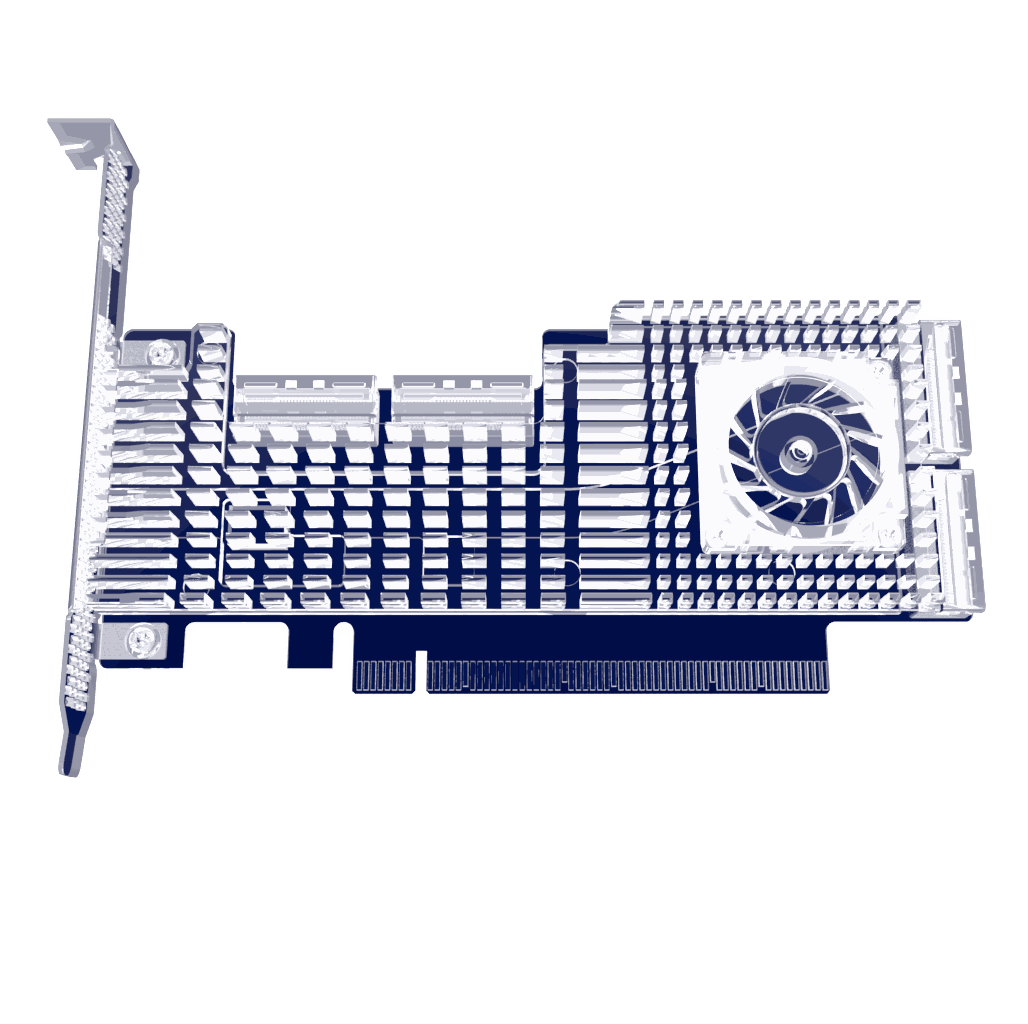
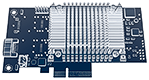
After 26 years, it’s no exaggeration to describe the memory market as “crazy.” The market has surpassed its 2018 peak to reach an all-time high. Against the backdrop of skyrocketing memory prices, traditional approaches to memory expansion must be rewritten. This article will describe how the LRDR9G91-2I utilizes CXL technology for memory expansion; the specific expansion plan is detailed below.

This paper will deeply analyze industry pain points(limited PCIe slots, difficulty in balancing GPU and SSD deployment, and lack of flexibility in expansion solutions) and demonstrate how LR-LINK LRSV9500-4I provides enterprises with a one-stop expansion solution through flexible X4/X8/X16 Bifurcation modes.
This paper will deeply analyze industry pain points(limited PCIe slots, difficulty in balancing GPU and SSD deployment, and lack of flexibility in expansion solutions) and demonstrate how LR-LINK LRSV9500-4I provides enterprises with a one-stop expansion solution through flexible X4/X8/X16 Bifurcation modes.
This article delves into the five core challenges facing the machine vision industry and details how the LRES1042PT 10 Gigabit Ethernet card delivers a comprehensive solution through its innovative hardware architecture and giant frame processing technology.
LREC9804BF-4SFP+ is a intel 10gbe nic,which is a PCIe 3.0 x8 SFP+, quad-port 10G SFP+ Ethernet network adapter based on Intel XL710 server network card . It is not merely a network card, but the cornerstone for building an efficient, stable, and intelligent network.
The LRES2680PT-PoE from LR-LINK, a high-performance network adapter integrating 5G network card high-speed transmission with PoE network card power supply functionality, is gaining significant attention in industrial vision and edge computing due to its outstanding real-world performance. This article will delve into the core advantages of this industrial camera network card, which approaches 10 Gigabit Ethernet performance levels, based on detailed official test reports.
For the remote wake-up feature commonly used in most centrally managed networks, enabling it on target devices from a single management machine offers both convenience and efficiency. This article provides a detailed guide to the practical implementation of remote wake-up.
WOL stands for Wake-on-LAN, meaning “LAN Wake-up.” It is a network technology that enables remote wake-up of computers or devices from sleep, standby, or shutdown states over a network. (Note: This requires devices supporting low-power network standby after shutdown.) This technology significantly enhances IT management flexibility, allowing administrators to restart or power on devices anytime without physical access.
The LRES6080PF-4SFP28 time synchronization card is designed to meet O-RAN requirements for LLS-C1, LLS-C2, and LLS-C3 (operating modes for boundary clocks and transparent clocks). It supports 1588v2 PTP and SyncE protocols, featuring an integrated GNSS module and external clock input. This card is applicable across multiple scenarios, from 5G RAN to industrial control.
5G time synchronization cards play a critical role in modern network technology. 5G requires time-division duplex (TDD) carriers to support network-wide time synchronization accuracy below 3 microseconds, with even stricter requirements when using MIMO or carrier aggregation. In scenarios such as 5G RAN and edge computing, network devices require highly synchronized time signals (microsecond-level accuracy) to ensure communication quality and data transmission reliability.
This article will teach you how to use iperf2 for network speed testing.
This article will comprehensively explain PXE by covering what it is, its architecture, boot process, application scenarios, and illustrative examples.