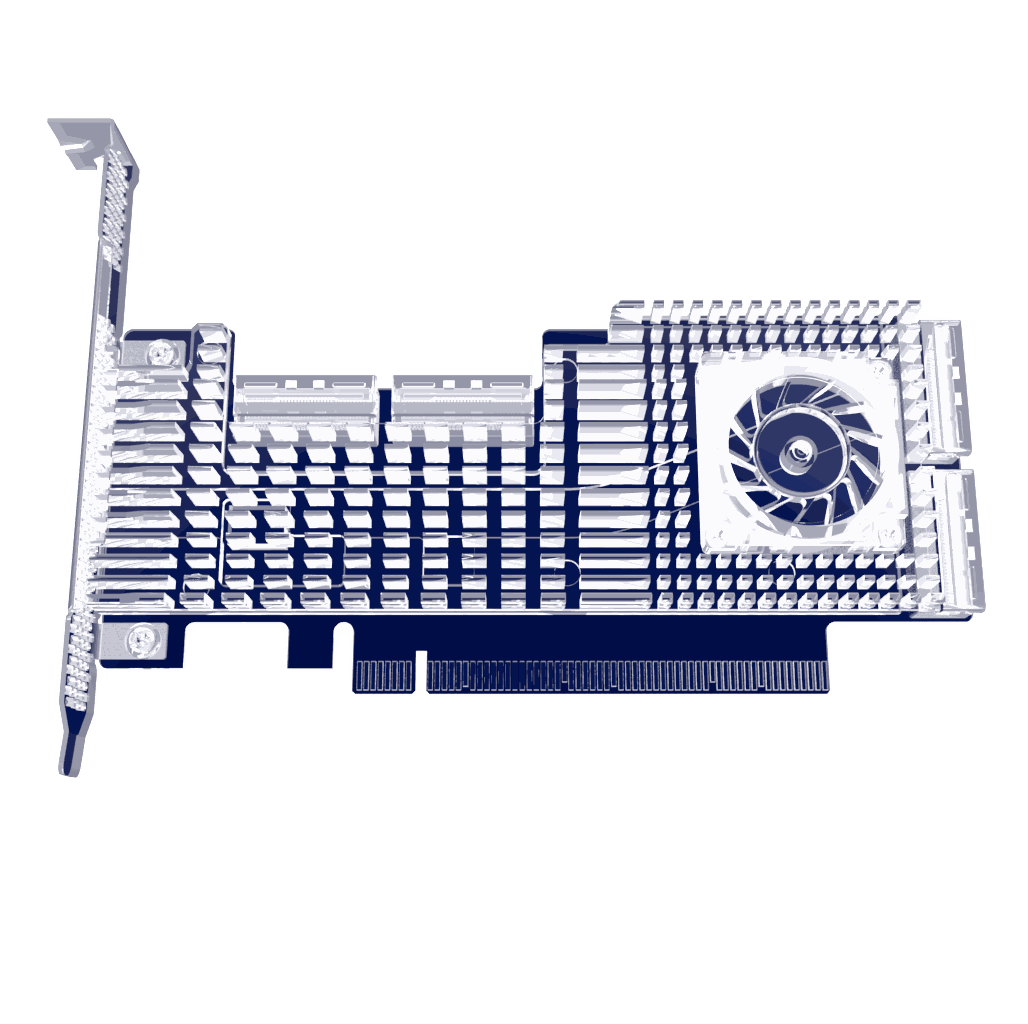
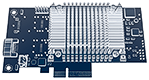
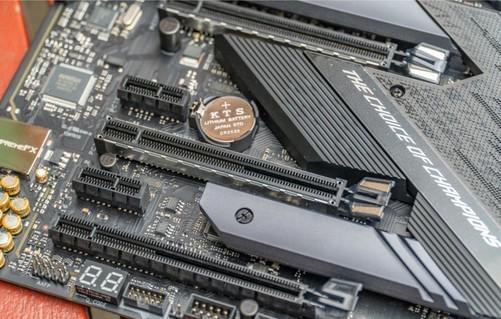
The PCIe (Peripheral Component Interconnect Express) bus is a high-speed serial computer expansion bus standard that replaces older parallel bus architectures (PCI, AGP, PCI-X). Introduced in 2003 and maintained by PCI-SIG, PCIe provides point-to-point connections between the CPU/chipset (Root Complex) and peripheral devices (Endpoints) through switches and bridges. Each connection uses one or more lanes, with current generations (Gen3/Gen4/Gen5) delivering 8/16/32 GT/s per lane (PCI-SIG PCI Express Base Specification, Rev 5.0).
The PCIe bus architecture consists of four key components:
Root Complex: The host bridge that connects the CPU/memory subsystem to the PCIe hierarchy. It generates transactions on behalf of the CPU and manages configuration space for all connected devices.
Endpoints: Peripheral devices (NICs, GPUs, storage controllers) that initiate or complete transactions. Endpoints can be Legacy (requiring memory/IO space) or PCIe-native (using Message Signaled Interrupts).
Switches: Devices that expand the PCIe hierarchy by routing packets between multiple ports. Switches enable fan-out from a single Root Complex port to multiple Endpoints.
Bridges: Convert between PCIe and other protocols (PCI, PCI-X, legacy interfaces), enabling backward compatibility with older devices.
Data travels as Transaction Layer Packets (TLPs) containing headers, payload, and CRC. The bus uses a packet-switched protocol with flow control credits to prevent buffer overflow. Each device negotiates link width (x1-x16) and speed (Gen1-Gen5) during initialization.
Key Benefits
High Bandwidth: PCIe Gen4 x16 delivers 64 GB/s bidirectional bandwidth, sufficient for 200GbE networking, high-end GPUs, and enterprise storage. Gen5 doubles this to 128 GB/s (PCI-SIG, 2022).
Low Latency: Point-to-point connections eliminate bus contention, achieving sub-microsecond latency for device-to-device communication. This is critical for real-time networking and storage applications.
Scalability: The switched fabric architecture supports thousands of devices in large systems (servers, workstations, embedded platforms) without performance degradation.
Hot-Plug and Power Management: PCIe supports hot-plug functionality and advanced power management (ASPM, L1/L2/L3 states), enabling dynamic device addition/removal and energy efficiency in data centers.
Server Networking: Modern data center servers use PCIe buses to connect high-performance NICs (10/25/100/200GbE). LR-LINK LRES1027PF-4SFP28 connects via PCIe Gen3 x8, delivering 25GbE performance with headroom for future upgrades.
GPU Computing: AI training clusters rely on PCIe buses to connect multiple GPUs to host CPUs. PCIe Gen4 x16 provides 64 GB/s for transferring model parameters and gradients between GPU memory and system memory.
Enterprise Storage: NVMe SSDs leverage PCIe buses for direct storage access, achieving 7 GB/s sequential read speeds (Gen4 x4) and sub-100-microsecond latency. Enterprise U.2 drives use x8 or x16 configurations for aggregate multi-TB/s bandwidth.
Network Function Virtualization: NFV platforms use PCIe buses to connect SmartNICs and FPGA accelerators that offload packet processing, encryption, and compression from the CPU, improving throughput and reducing latency.
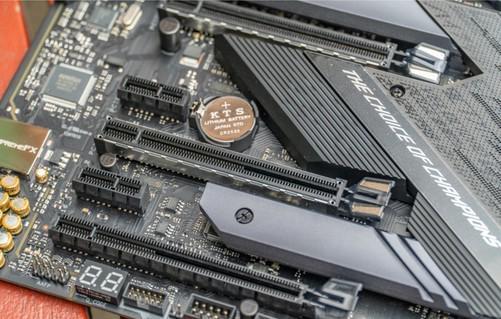
PCIe Lane is the fundamental unit of PCIe connectivity. A x16 bus slot contains 16 lanes (32 differential pairs), providing maximum bandwidth for high-performance devices.
NIC connects to the PCIe bus as an endpoint device. The number of lanes allocated determines maximum network throughput: 10GbE requires x4, 25GbE requires x8, and 100GbE requires x16.
SR-IOV extends the PCIe bus to support hardware-level virtualization, allowing a single physical device to appear as multiple virtual devices to the hypervisor.
MSI-X interrupts are delivered over the PCIe bus using Message Signaled Interrupts, providing efficient interrupt handling with dedicated vectors per function (up to 2048 per device).
The PCIe bus is the backbone of modern computer connectivity, replacing legacy parallel buses with a high-speed serial architecture. Through its Root Complex, Switch, and Endpoint topology, PCIe delivers scalable bandwidth, low latency, and advanced features for networking, compute, storage, and acceleration workloads. Understanding PCIe bus architecture is essential for designing systems that maximize I/O performance in high-performance environments.