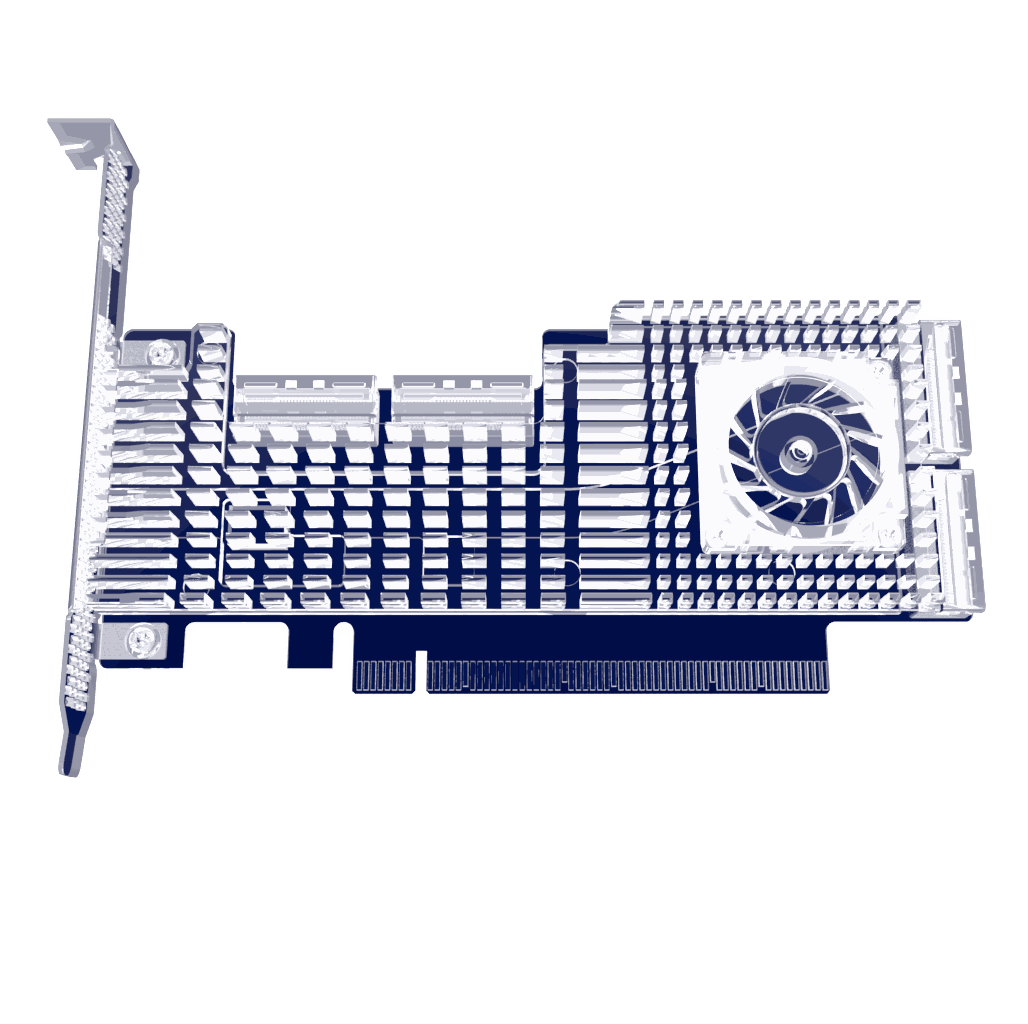
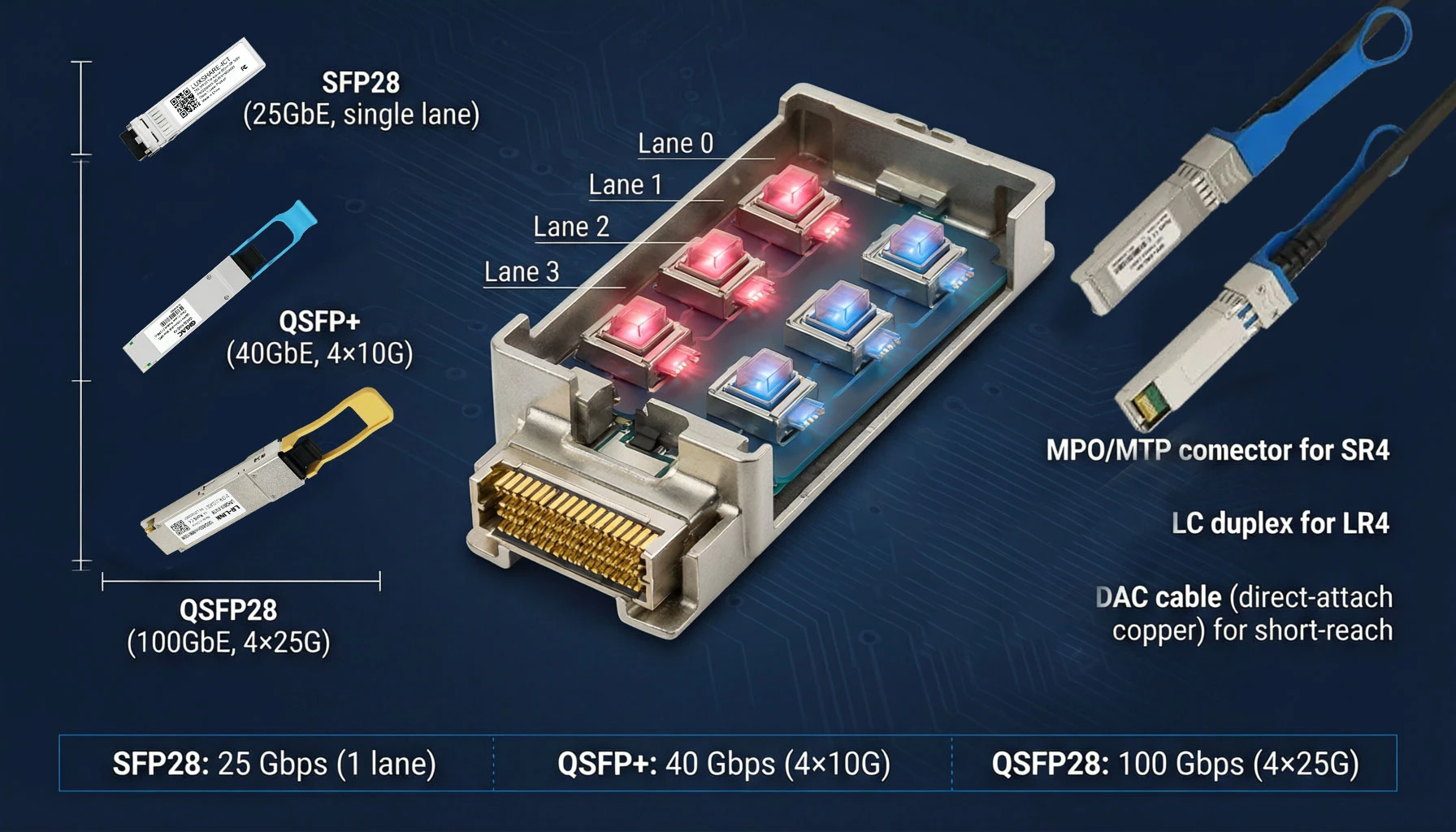
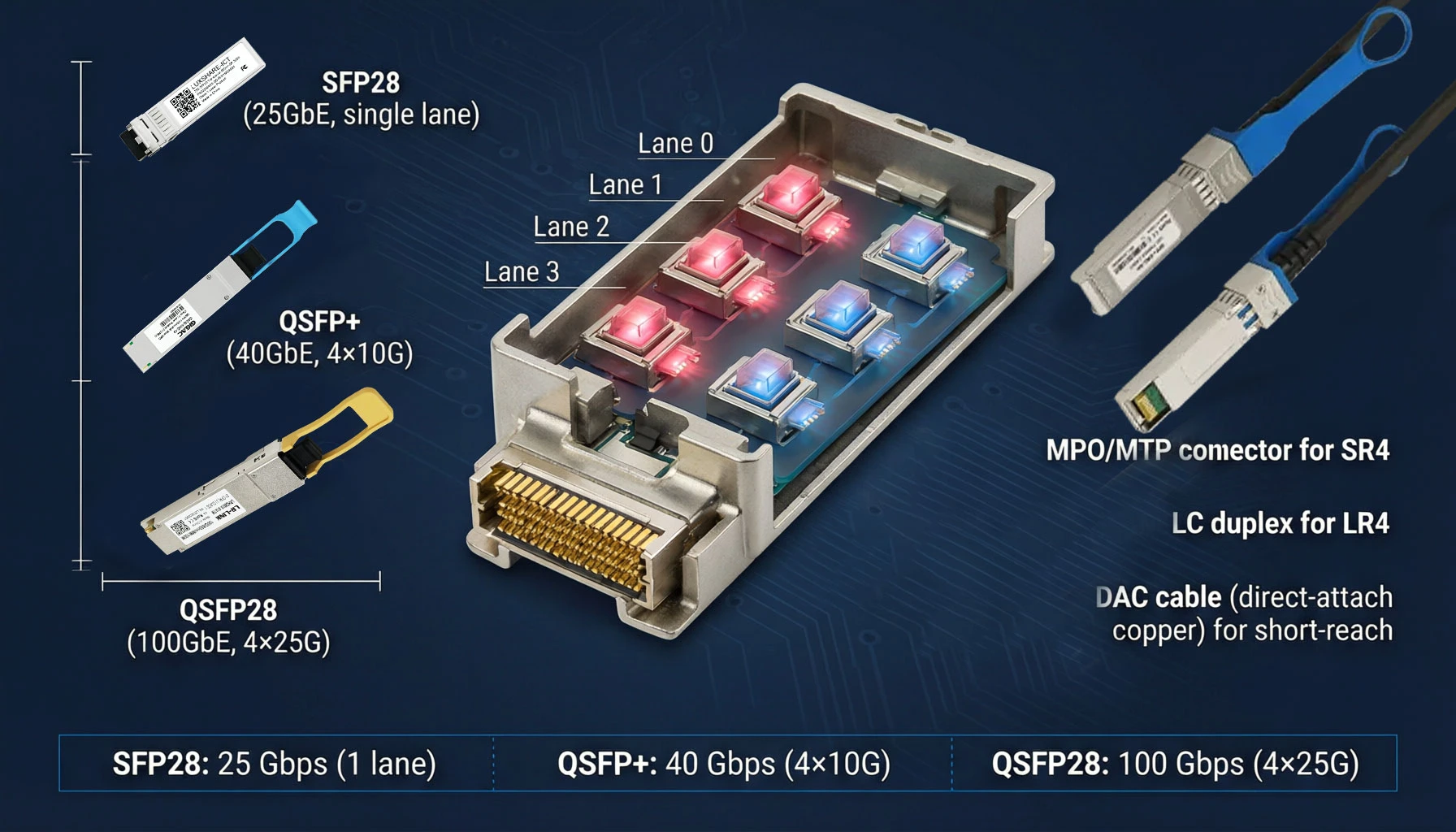
QSFP28 (Quad Small Form-factor Pluggable 28) is a 100 Gbps hot-pluggable transceiver form factor defined by the SFF-8665 specification. It uses four 25 Gbps lanes (4×25G) to achieve 100 Gbps aggregate bandwidth, making it the standard interface for 100GbE networking in data centers. QSFP28 maintains the same physical dimensions as QSFP+ (10GbE×4 = 40GbE) but operates at 25 Gbps per lane instead of 10 Gbps, and is backward compatible with QSFP+ cages (SFF-8665 Rev 1.1).
QSFP28 transceivers aggregate four independent 25 Gbps channels into a single 100 Gbps interface:
Four-Lane Architecture: Each of the four lanes (Lane 0-3) operates at 25 Gbps using 64b/66b encoding (28 Gbps raw rate). The lanes are fully independent, allowing flexible configurations such as 4×25GbE breakout or single 100GbE connection.
Electrical Interface: The QSFP28 module connects to the host via a 38-pin gold-plated connector. It supports both NRZ (Non-Return-to-Zero) modulation for standard 100GbE and PAM4 modulation for extended reach applications.
Optical Transceiver: For fiber connections, the module contains four laser transmitters and four photodiode receivers. Common variants include SR4 (100m multimode), LR4 (10km single-mode), and ER4 (40km single-mode).
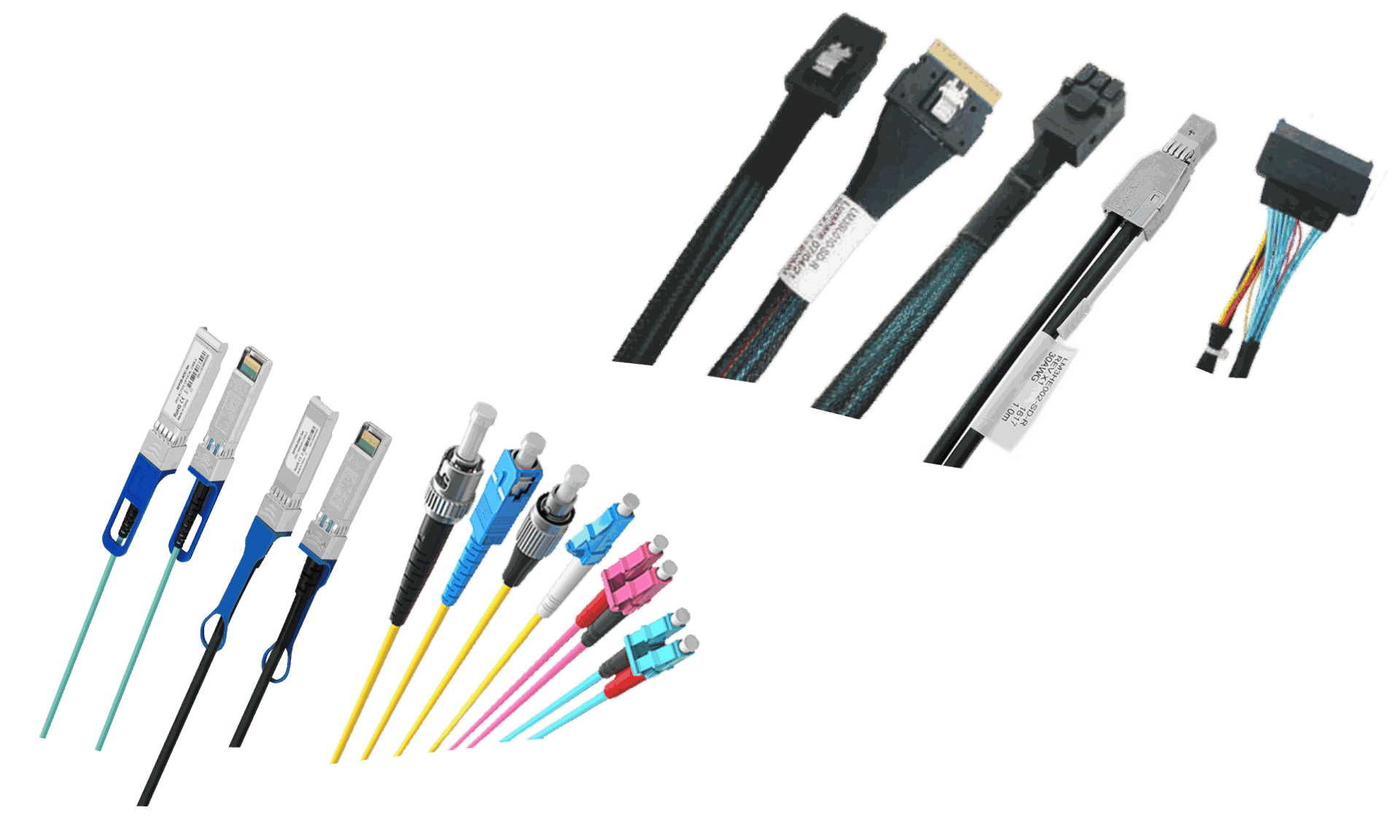
Breakout Capability: A single QSFP28 port can be split into four 25GbE SFP28 connections using a breakout DAC cable, providing flexibility for server-to-switch connectivity at different speed tiers.
The QSFP28 form factor measures 18.35mm × 8.5mm × 120mm, identical to QSFP+, ensuring mechanical compatibility with existing 40GbE switch ports.
100 Gbps Bandwidth: QSFP28 delivers 2.5× the bandwidth of QSFP+ (40GbE) while maintaining the same form factor, enabling seamless upgrades from 40GbE to 100GbE without replacing switch hardware (SFF-8665, 2015).
Breakout Flexibility: A single 100GbE QSFP28 port can serve four 25GbE servers via breakout cable, optimizing switch port utilization and reducing cost per server connection.
Low Power Consumption: QSFP28 modules consume ≤3.5W per port, significantly less than CFP (200GbE) while providing sufficient bandwidth for most data center server-to-switch connections.
Long Reach Options: QSFP28 supports distances from 1m (DAC) to 40km (ER4 single-mode fiber), covering all data center interconnect scenarios from rack-level to campus-level.
Data Center Top-of-Rack: QSFP28 is the dominant interface for 100GbE server-to-switch connections in modern hyperscale data centers. LR-LINK LRES1014PF-2QSFP28 provides dual 100GbE ports for high-density server networking.
Spine-Leaf Architecture: QSFP28 enables 100GbE leaf-to-spine interconnects, with 400GbE QSFP-DD uplinks aggregating traffic between spine switches for non-blocking fabric design.
High-Performance Computing: HPC clusters use QSFP28 for 100GbE RDMA/RoCE interconnects, achieving sub-5-microsecond latency for distributed computing workloads like AI training and scientific simulations.
Telecommunications: Mobile fronthaul and backhaul networks deploy QSFP28 for 5G baseband unit connectivity, requiring deterministic low latency and high bandwidth for CPRI/eCPRI traffic.
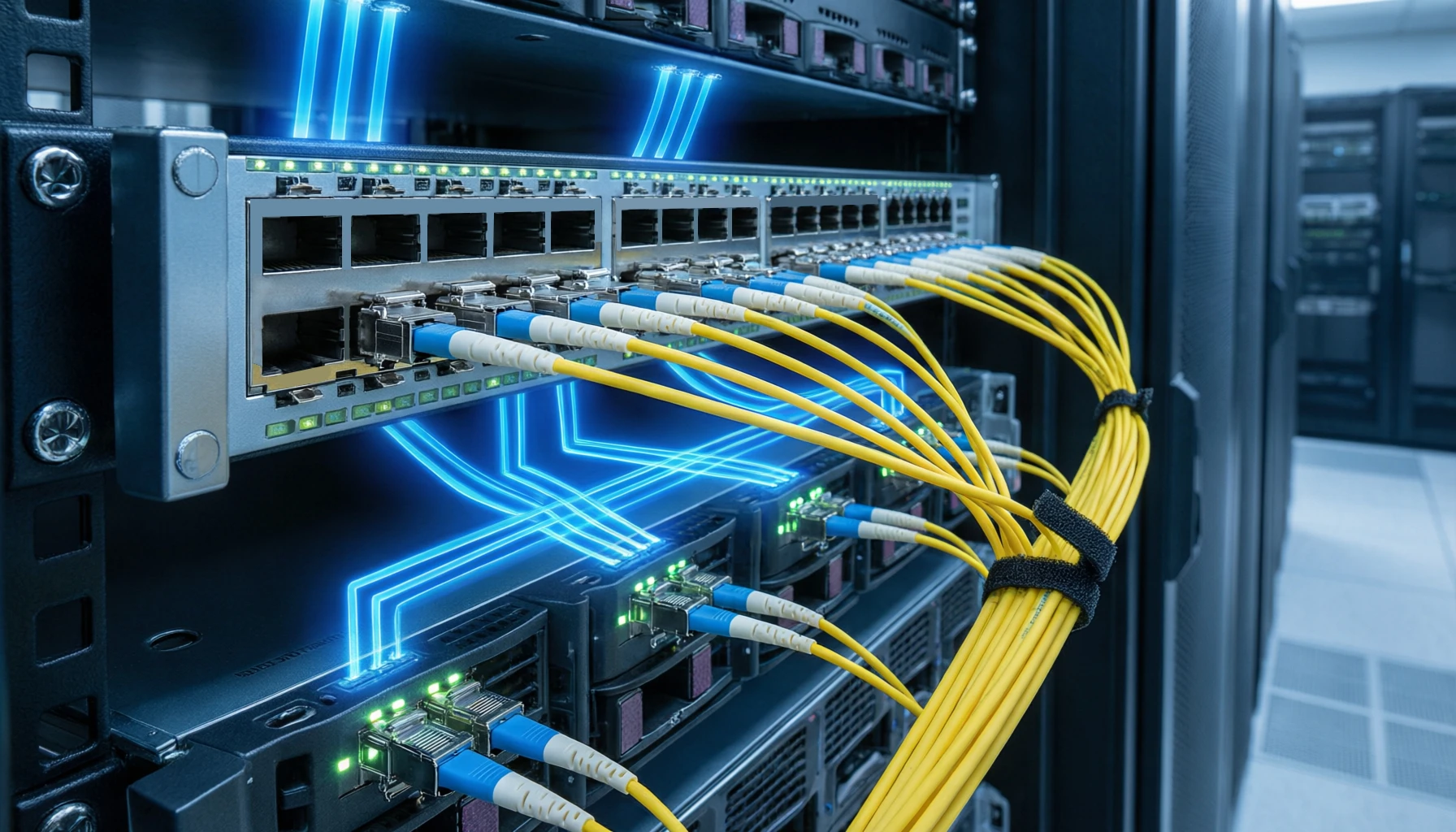
SFP28 is the single-lane 25GbE counterpart to QSFP28. A QSFP28-to-4×SFP28 breakout cable splits one 100GbE port into four 25GbE connections, bridging speed tiers in mixed-speed data centers.
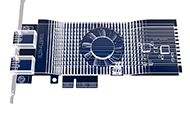
NIC implements QSFP28 cages for 100GbE connectivity. LR-LINK LRES1014PF-2QSFP28 features dual QSFP28 ports, each supporting 100GbE with breakout to 4×25GbE.
RDMA leverages QSFP28 for 100GbE RoCE (RDMA over Converged Ethernet), enabling zero-copy, kernel-bypass networking for low-latency HPC and AI training workloads.
PCIe Lane bandwidth must match QSFP28 speed requirements. A 100GbE NIC typically uses PCIe Gen3 x16 (128 Gbps) or Gen4 x8 (128 Gbps) to handle bidirectional 100GbE traffic without bottleneck.
QSFP28 is the dominant 100GbE transceiver form factor, delivering 2.5× the bandwidth of QSFP+ while maintaining mechanical compatibility. Through its four-lane architecture, breakout flexibility, and range of optical reach options, QSFP28 enables scalable, high-performance networking for data centers, HPC clusters, and telecommunications infrastructure. Its backward compatibility with QSFP+ ensures smooth migration paths from 40GbE to 100GbE.