What Is Auto-Negotiation?
Auto-Negotiation is an Ethernet protocol that allows two connected devices to automatically select the highest common speed and duplex mode they both support. Defined in IEEE 802.3 Clause 28 (for 10/100 Mbps) and Clause 40 (for 1000BASE-T and above), the protocol uses Fast Link Pulse (FLP) bursts to exchange capability information during link initialization. The result is a connection running at the best mutually supported speed without manual configuration.
How Does Auto-Negotiation Work?
Auto-Negotiation follows a defined handshake sequence:
- FLP Burst Exchange: Both devices transmit Fast Link Pulse bursts during link-up. Each FLP burst contains an ability word encoding supported speeds (10M/100M/1G/2.5G/5G/10G), duplex modes (half/full), and optional features (flow control, EEE).
- Base Page Comparison: Each side decodes the peer's ability word and identifies the highest common speed. If both support 10GbE, that speed is selected; otherwise the negotiation falls back to the next highest common speed.
- Technology Resolution: When multiple speeds match, the protocol selects the highest one. For duplex, full duplex is preferred over half duplex when both sides support it (IEEE 802.3 Clause 28.2.3).
- Link Establishment: Both devices configure their PHY to the negotiated parameters and bring the link up. If negotiation fails, the devices fall back to a predefined default (typically 10 Mbps half duplex for copper, or link-down for fiber).
The entire process completes in under 500 milliseconds for most copper Ethernet links.
Key Benefits
- Zero Configuration: Network administrators do not need to manually set speed and duplex on each port. Auto-Negotiation eliminates mismatched settings that cause link failures or performance degradation (IEEE 802.3-2018).
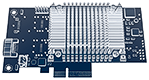
- Multi-Speed Compatibility: A single NIC port can connect to devices at different speed tiers. The Intel X550-based LR-LINK LREC9811BT negotiates 1G, 2.5G, 5G, or 10G depending on the peer device, making it compatible with legacy and modern switches.
- Duplex Optimization: Auto-Negotiation always selects full duplex when both sides support it, doubling effective throughput compared to half duplex and eliminating collision-domain limitations.
- Reduced Troubleshooting: Speed and duplex mismatches are a common cause of intermittent network issues. Auto-Negotiation prevents these by ensuring both ends agree on parameters before data flows.
Related Technologies
- Full Duplex is the preferred outcome of Auto-Negotiation for modern Ethernet. When both devices support full duplex, the link operates without collision detection, allowing simultaneous send and receive at full line rate.
- PHY implements the Auto-Negotiation protocol at the physical layer. The PHY generates FLP bursts, decodes peer abilities, and configures the link parameters based on the negotiation result.
- NIC controllers integrate the PHY and MAC, handling Auto-Negotiation transparently during driver initialization. Intel-based NICs like the LREC9811BT expose negotiation status through driver ethtool registers for diagnostics.