What Is LRO?
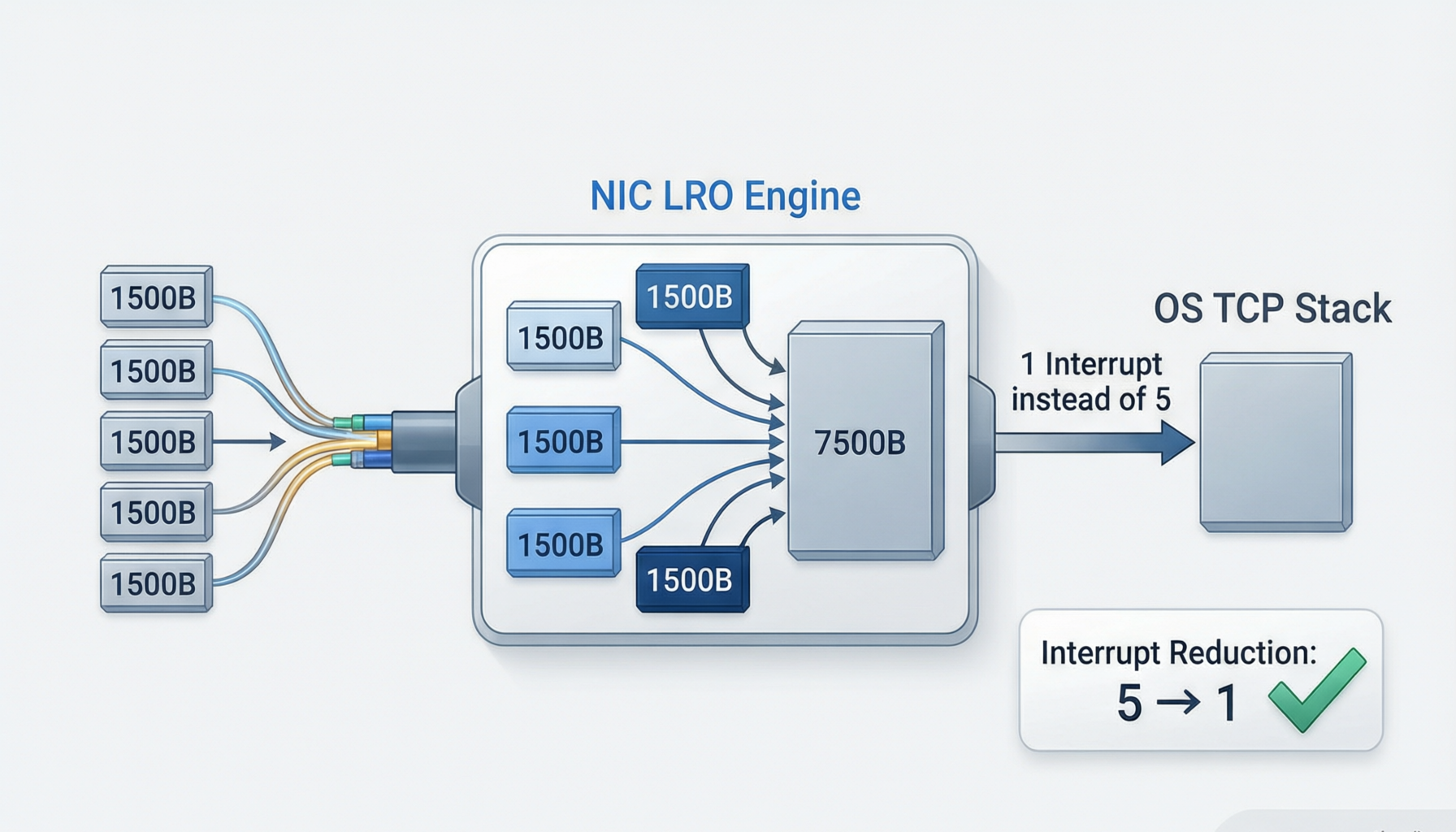
LRO (Large Receive Offload) is a NIC feature that reassembles incoming TCP segments into fewer, larger buffers before passing them to the host OS. Without LRO, every incoming frame triggers a DMA transfer, an interrupt, and a kernel stack traversal. At 10GbE and above, the interrupt rate from small frames can saturate a CPU core. LRO coalesces sequential segments from the same flow inside the NIC hardware, producing a single large buffer for the TCP stack (Microsoft NDIS specification; Intel 82599 datasheet).
How Does LRO Work?
LRO reduces receive-path overhead through hardware-level segment coalescing:
- Flow Identification: The NIC extracts the TCP 5-tuple from each incoming frame. Frames from the same connection are grouped into a coalescing context.
- Sequence Validation: The NIC checks that each segment is the next expected in sequence. Out-of-order segments, duplicates, and FIN/RST flags break the coalescing chain.
- Buffer Coalescing: Consecutive in-order payloads are concatenated into one large buffer in NIC memory. The NIC maintains a running TCP checksum as data is appended.
- Single Interrupt Delivery: The NIC delivers the coalesced buffer with one interrupt instead of one per frame. The driver passes the large buffer to the TCP stack in a single operation.
This process reduces interrupts by a factor of 40 or more at line rate on 25GbE links.
Key Benefits
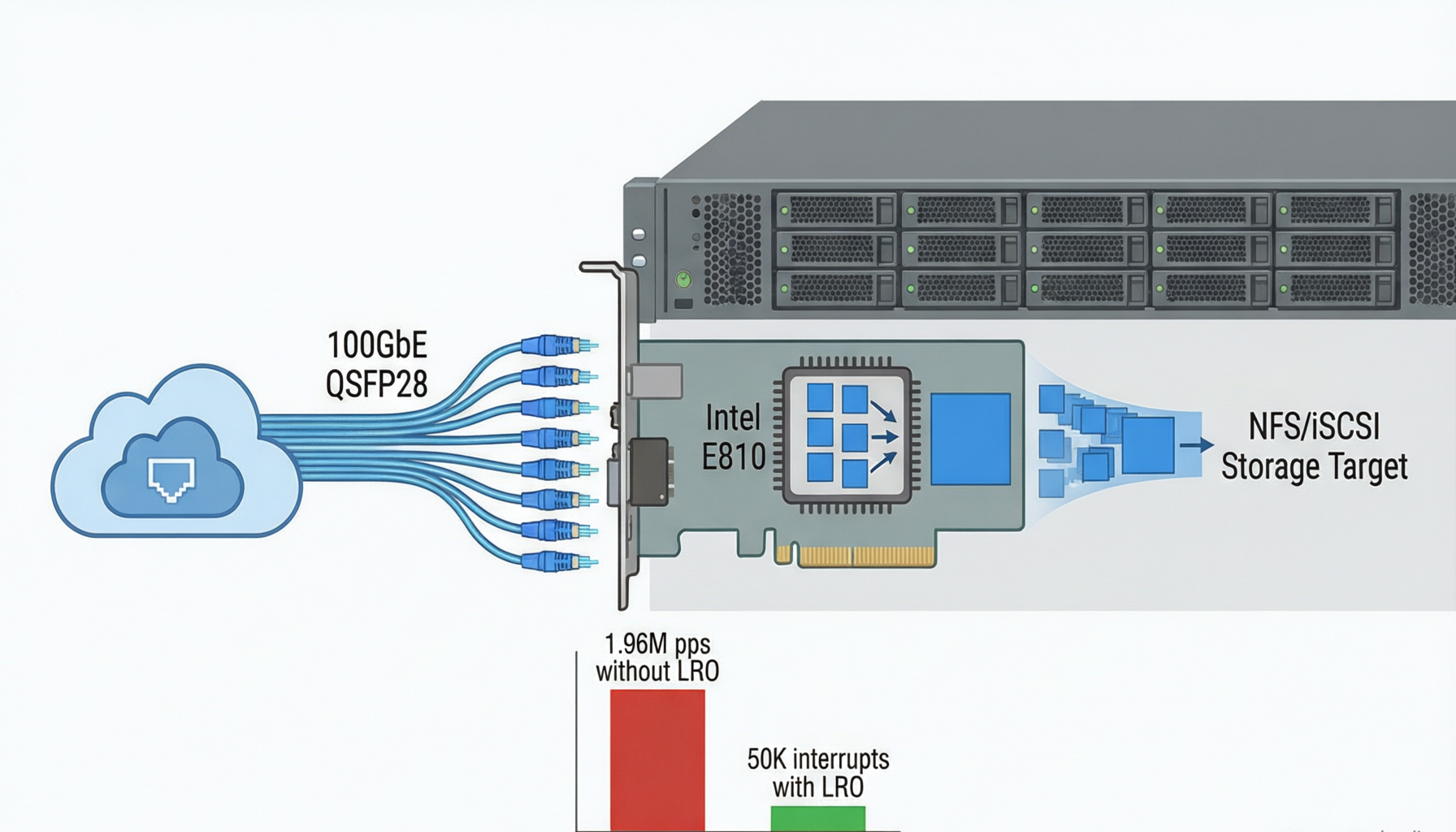
- Interrupt Reduction: At 25GbE with 1500-byte MTU, the link delivers 1.96 million packets per second. LRO coalesces segments so the NIC raises only 30,000 to 50,000 interrupts per second, cutting overhead by 97 percent (Intel E810 datasheet, 2023).
- Lower CPU Usage: Benchmarks show LRO reduces receive-path CPU usage by 40 to 60 percent on high-throughput connections (Intel Performance Brief, 2023).
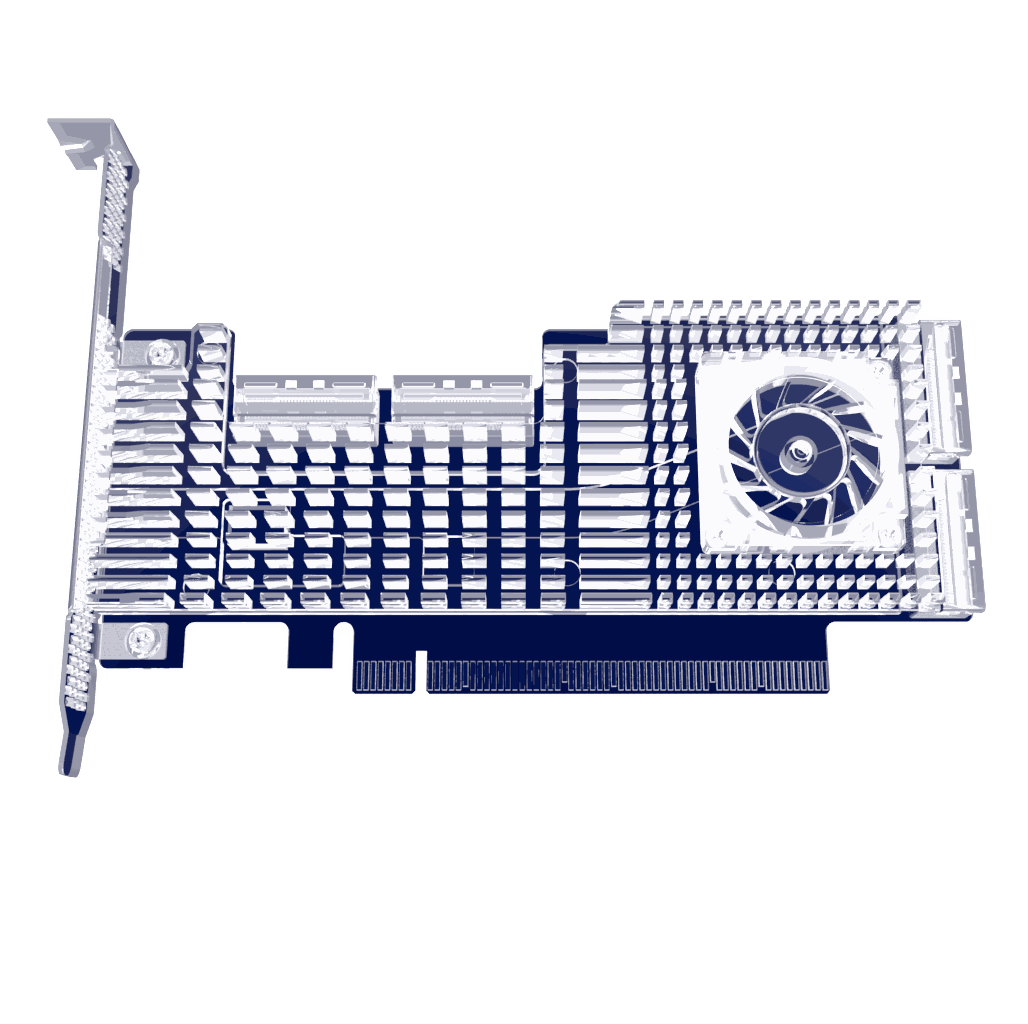
- Storage Target Performance: NFS and iSCSI servers receive large sequential streams. LRO lets 100GbE NICs like the LRES1014PF-2QSFP28 coalesce incoming writes, reducing CPU overhead and improving IOPS.
- Virtualization Consolidation: Hypervisors receiving traffic for multiple VMs reduce total interrupt load across all VMs sharing a physical NIC port, enabling higher VM density per host.
- Better Throughput: Large buffers let applications read data in bigger chunks, improving effective throughput for bulk receive workloads.
Related Technologies
- GRO performs the same coalescing as LRO but in the kernel stack, working with virtual interfaces and routed traffic. GRO has largely replaced LRO on modern Linux systems.
- TSO is the transmit-side complement. TSO segments large buffers into MTU-sized frames on send; LRO reassembles frames into large buffers on receive.
- MTU affects LRO efficiency. Standard 1500-byte frames produce the highest interrupt rates and benefit most. With jumbo frames (9000 bytes), the interrupt rate is already lower.