2026-06-03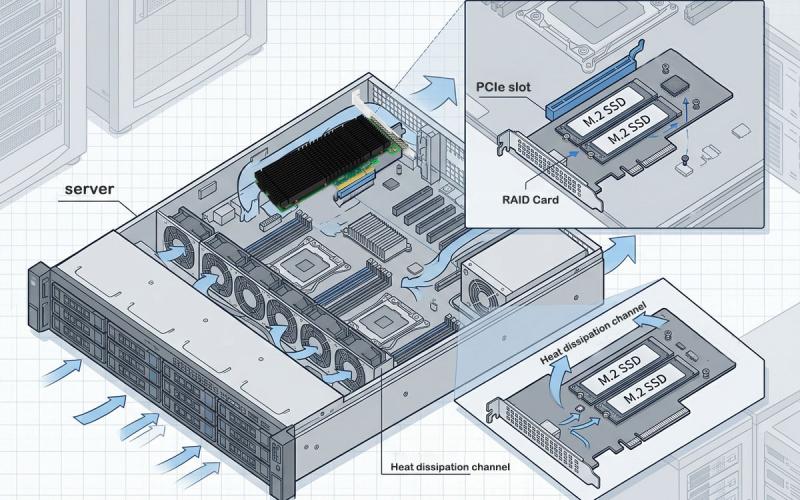
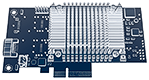
With the transformation and upgrading of intelligent manufacturing, machine vision inspection systems have become critical to ensuring product quality. Taking a vision inspection production line upgrade project as an example, this article demonstrates the practical application of the LRSV9310-2IR M.2 NVMe RAID expansion card in industrial vision inspection scenarios, providing a reference for enterprises facing similar storage challenges.
The project is for a consumer electronics parts manufacturer with multiple automated production lines and machine vision inspection systems for appearance defect detection. As production capacity expanded and inspection accuracy requirements increased, the original storage system gradually became a bottleneck.
Storage Performance Bottleneck The original IPC used a single SATA SSD with a write speed of about 500 MB/s. However, 4 industrial cameras (5MP, 30fps) generated data at 1.8 GB/s, far exceeding SATA write capability. Images had to be cached in memory first, risking data loss.
1.Insufficient Data Reliability Inspection images must be stored for at least 6 months for traceability. Single-disk storage lacked redundancy; drive failure caused permanent data loss.
2.Limited Storage Capacity Single 2.5-inch SSD offered limited capacity, and the compact IPC chassis could not hold additional drives.
3.Chassis Space Constraints The compact IPC only had one 2.5-inch bay and one low-profile PCIe slot, making traditional expansion unfeasible.
4.Chassis Space Constraints The compact IPC only had one 2.5-inch bay and one low-profile PCIe slot, making traditional expansion unfeasible.
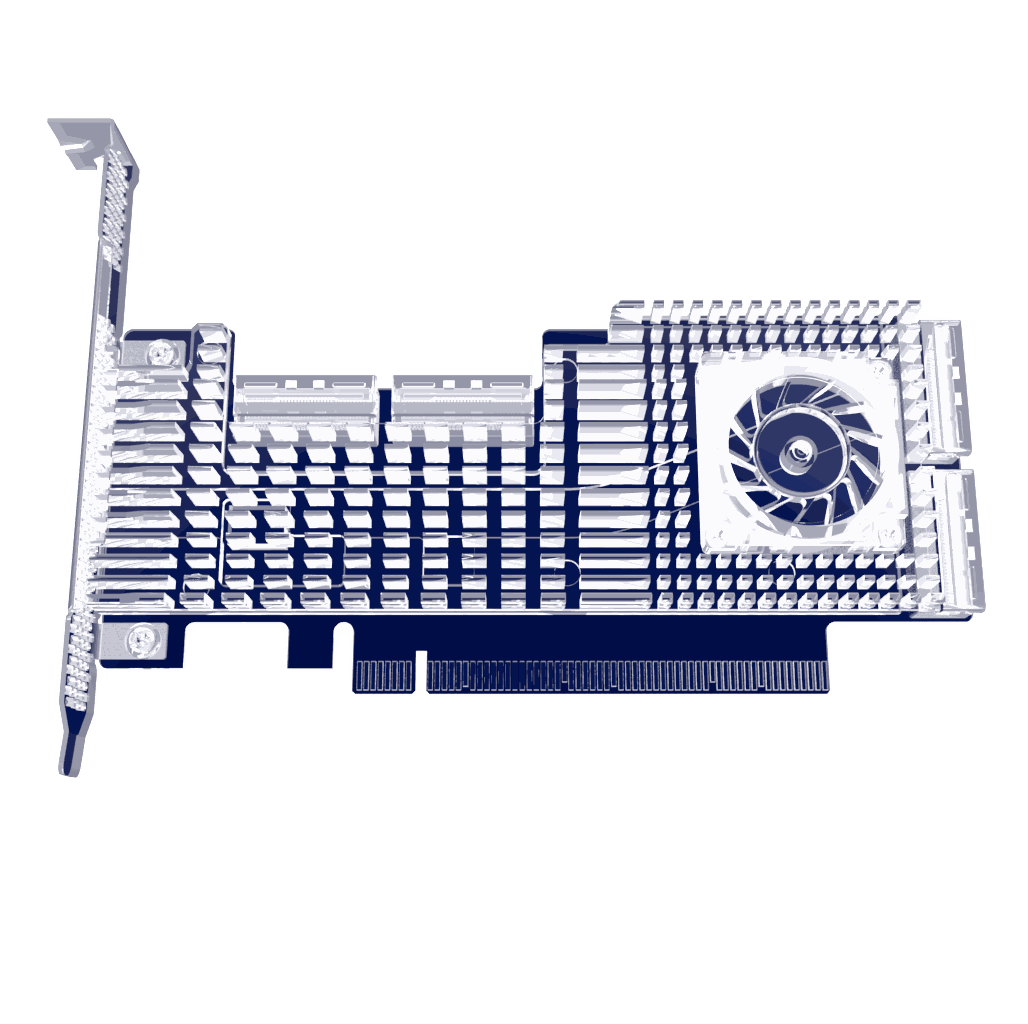
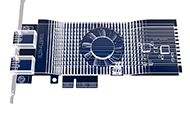
After technical evaluation, the project adopted the LRSV9310-2IR PCIe 3.0 x8 to Dual M.2 NVMe RAID Expansion Card with two 2TB industrial M.2 NVMe SSDs (2280).

· LRSV9310-2IR installed in the IPC low-profile PCIe x16 slot, perfectly fitting the compact chassis.
· Two 2TB M.2 NVMe SSDs configured in RAID 1 (Mirror).
· RAID 1 delivers real-time redundancy; one drive fails with zero data loss and uninterrupted operation.
· NVMe provides over 3 GB/s bandwidth to meet concurrent multi-camera writing.
· Data Security First: Inspection images are critical production data. RAID 1 ensures dual-copy redundancy.
· Sufficient Performance: ~3 GB/s write speed far exceeds the original 500 MB/s, easily satisfying 4 cameras.
Easy Maintenance: Hot plug rebuild supports drive replacement without downtime.
Software Configuration
The system runs Galaxy Kylin V10, and LRSV9310-2IR is plug and play with no driver required. RAID 1 is configured in the BIOS; the OS recognizes one 2TB logical drive. XFS filesystem is used for optimized large file writing.
Performance Test Results (fio)
Test Items | Test Results | Comparison with the Original Solution |
Sequential Write | 2,850 MB/s | 5.7x improvement |
Sequential Read | 3,200 MB/s | 6.4x improvement |
4K Random Write IOPS | 180,000 | 10x improvement |
After storage upgrade, the image collection efficiency of the vision inspection system is significantly improved. Four industrial cameras can continuously shoot at full speed, and image data is written to disk in real time, eliminating frame loss caused by storage bottlenecks. The line inspection speed increased from 60 pieces per minute to 120 pieces per minute, doubling the production capacity.
The RAID 1 mirroring mechanism provides real-time redundancy protection for quality inspection data. If an SSD failure occurs after project implementation, the system automatically switches to the normal hard disk through RAID 1, with zero loss of inspection data and no impact on production. After the faulty disk is replaced, the RAID array is automatically rebuilt without downtime.
The hot-plug rebuilding function of RAID 1 greatly simplifies storage maintenance. Compared with the complex process of the traditional single-disk solution, which requires downtime backup, disk replacement and data recovery, the disk replacement and array rebuilding can now be completed without downtime, reducing the single maintenance time from 4 hours to 30 minutes.
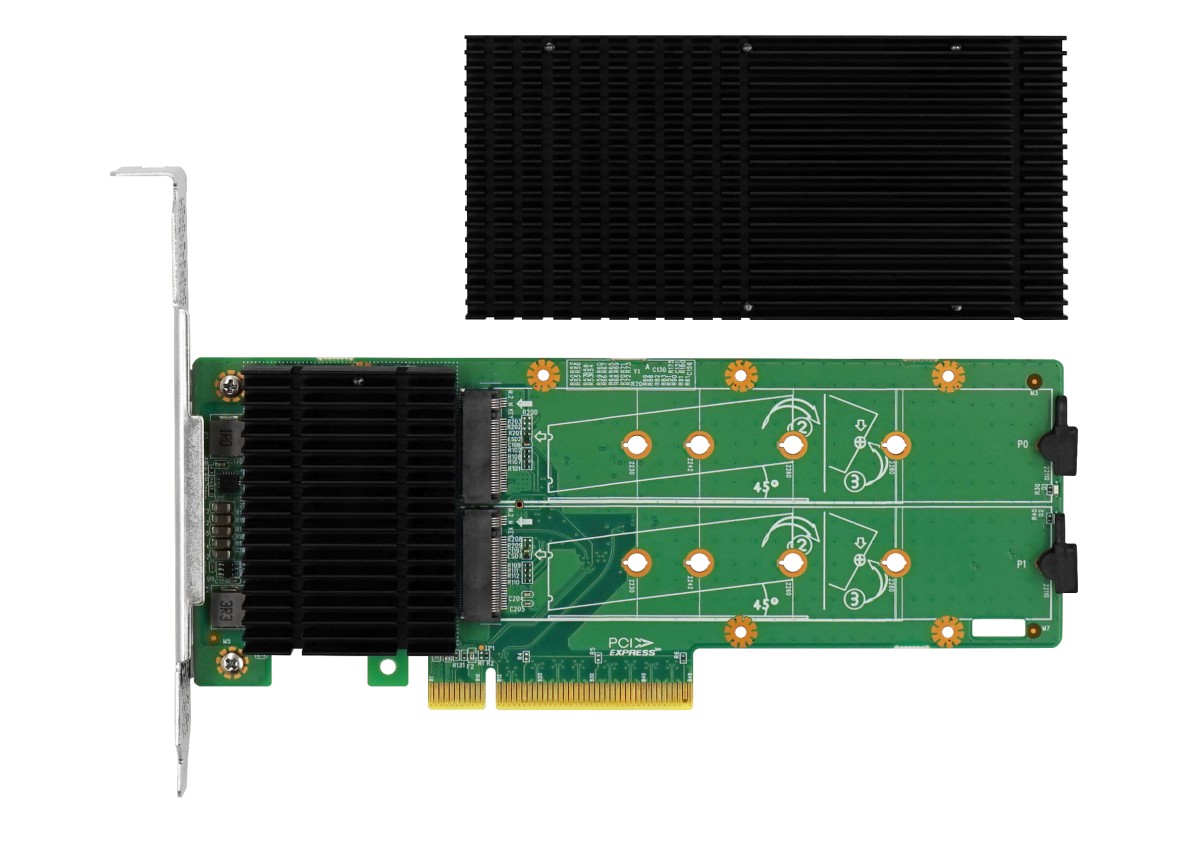
The project implementation has verified the practical value of LRSV9310-2IR in industrial vision inspection scenarios. The following are the key summaries of project implementation:
1.Fully evaluate performance requirements In the selection stage, the project team calculated the theoretical bandwidth requirements for concurrent writing of multiple cameras in detail, and reserved 30% performance margin. This ensures that the storage system can operate stably even when the camera frame rate fluctuates or burst data writing occurs in actual operation.
2.Attach importance to data reliability design For key application scenarios such as quality inspection, data reliability should be paid equal attention to performance. Although RAID 1 sacrifices half of the storage capacity, the data security guarantee it brings is irreplaceable in the production environment.
3.Focus on physical compatibility Compact industrial PCs used in industrial sites have strict restrictions on the size of expansion cards. The low-profile, half-length design of LRSV9310-2IR enables it to fit standard industrial chassis, and the standard dual-bracket configuration also provides flexibility for different installation environments.
4.Verify operating system compatibility The driver-free design of LRSV9310-2IR simplifies the deployment process. For industrial projects using domestic operating systems, sufficient compatibility testing is recommended before formal deployment.
Based on implementation experience, LRSV9310-2IR can also be applied to the following similar scenarios:
· Semiconductor wafer inspection: High-speed collection of wafer surface images with AI defect recognition algorithms
· Auto parts quality inspection: Multi-station vision inspection, real-time storage of high-definition inspection images
· Food packaging inspection: High-speed production line vision inspection to ensure packaging integrity and label correctness
· Pharmaceutical packaging traceability: Long-term storage and traceability of inspection data meeting GMP requirements
· Industrial video surveillance: 7×24-hour high-definition video recording storage, supporting intelligent analysis
The LRSV9310-2IR M.2 NVMe RAID expansion card provides a high-performance, high-reliability storage solution for the vision inspection system of this electronics manufacturer. Through the RAID 1 mirroring mechanism, the enterprise achieves more than 5x storage performance improvement while realizing real-time redundancy protection of key inspection data.
For industrial enterprises facing similar storage challenges, it is recommended to start from actual business needs, comprehensively evaluate performance, reliability, capacity, cost and other factors, and select the most suitable storage expansion solution for their own scenarios. With its flexible RAID configuration, compact design and wide system compatibility, LRSV9310-2IR is worthy of inclusion in the evaluation list of industrial vision inspection storage solutions.